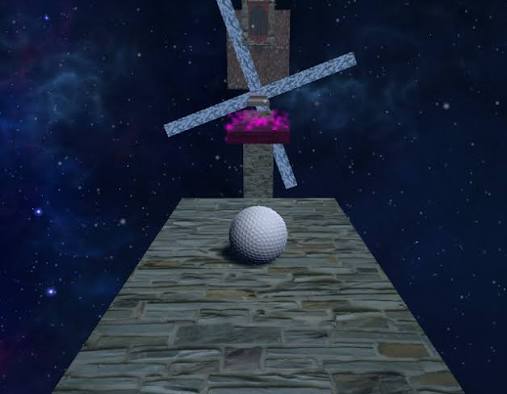
A relaxed finish takes most players around sixty to ninety seconds. A tight, practiced run lands in the thirties. Everything between those numbers is technique, and every technique below is learnable in an evening.
1. Never let go of forward
The single biggest time-loss for intermediate players is releasing the right key "to be safe" before jumps. The ball keeps its air speed — releasing forward mid-jump only makes you land short and slow. Hold forward through the entire jump unless you're actively avoiding an overshoot.
2. Jump from the last pixel
Distance in the air is free; distance on the ground costs acceleration time. The later you jump from a platform's edge, the flatter and faster your arc. The game's coyote-time window means "the last pixel" is actually a few forgiving frames past the edge — use all of them.
3. Buffer your landings
Press jump just before you land and the game stores it, firing the instant you touch down. Chained buffered jumps keep the ball bouncing at top speed with zero ground time. The rhythm feels like a drumbeat once it clicks — press, land-launch, press, land-launch.
4. Skip the detour stars
Stars don't affect your time, only your score. On a personal-best attempt, take only the stars sitting directly on your racing line — roughly two thirds of them — and pretend the rest don't exist.
5. Ride the platform elevator
Both moving-platform clusters can act as free boosts. Time your arrival so the platform is rising as you land, then jump immediately: its upward motion adds to your jump, letting you cut a higher line that skips the following dip entirely.
6. Practice the ending cold
Runs die at the end because nerves arrive with a good pace. Use the second checkpoint to drill the final stretch twenty times in a row until it's boring. A boring ending is a fast ending.